
$0.00
Introduction
Retatrutide Clinical Trials. Retatrutide is rapidly gaining attention as one of the most promising weight loss drugs currently in development. Unlike earlier medications, it uses a triple hormone mechanism, targeting GLP-1, GIP, and glucagon receptors—giving it a broader metabolic impact.
But what truly sets retatrutide apart isn’t just theory—it’s the clinical trial results.
Across multiple studies, retatrutide has shown record-breaking weight loss, improved metabolic health, and strong potential to outperform existing treatments.
In this article, we break down:
- Phase 1, Phase 2, and Phase 3 trial data
- Real weight loss results
- Safety and side effects
- What this means for the future
Overview of Retatrutide Clinical Development
Like all new medications, retatrutide goes through several stages of testing:
Phase 1
- Small group of participants
- Focus: safety and dosage
2
- Larger group
- Focus: effectiveness and side effects
Phase 3
- Large-scale trials
- Confirms effectiveness and monitors safety
Retatrutide has now progressed into Phase 3 trials, which is the final stage before potential approval.
Phase 1 Trials: Early Safety and Promise
The earliest studies focused on safety and initial effects.
- Conducted on a small group of participants
- Tested different dosage levels
- Showed early signs of appetite reduction and metabolic improvement
Results suggested:
- Favorable safety profile
- Early weight loss signals
- Strong potential for further research
Early trials demonstrated that retatrutide could significantly influence hunger hormones and energy balance.
Phase 2 Clinical Trials: Breakthrough Weight Loss Data
Phase 2 trials provided the first major evidence of effectiveness.
Study Design
- Participants: Adults with overweight or obesity
- Duration: Up to 48 weeks
- Multiple dose groups tested
Weight Loss Results
The results were striking:
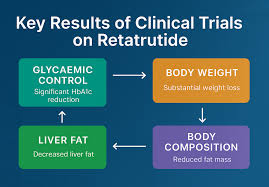
- Up to 24.2% average weight loss at 48 weeks (highest dose)
- Around 17–22% weight loss at moderate doses
- Placebo group: Minimal weight loss
This level of weight reduction was significantly higher than most existing medications at the time.
Metabolic Benefits
Beyond weight loss, participants experienced:
- Improved blood sugar control
- Better insulin sensitivity
- Positive cardiovascular markers
These findings show that retatrutide is not just a weight loss drug—it also supports overall metabolic health.
Side Effects in Phase 2
Common side effects included:
- Nausea
- Vomiting
- Diarrhea
- Constipation
These were mostly mild to moderate and occurred during dose escalation.
Phase 3 Clinical Trials: Record-Breaking Results
Phase 3 trials are where retatrutide truly stood out.
TRIUMPH-4 Trial (2025–2026)
One of the most important studies is the TRIUMPH-4 trial, focusing on people with obesity.
Key Results
- Average weight loss: 28.7% at 68 weeks
- Equivalent to about 70+ pounds lost
- Far higher than previous obesity medications
👉 This is considered one of the highest weight loss outcomes ever recorded in a clinical trial.
High Responders
- Many participants lost 25% or more of body weight
- Some exceeded 30–35% weight loss
This level of effectiveness approaches results typically seen with bariatric surgery.
Additional Benefits
Participants also experienced:
- Reduced joint pain
- Improved mobility
- Better quality of life
For example, patients with knee issues showed major improvements in pain and function.
TRANSCEND-T2D-1 Trial (Type 2 Diabetes Study)
Another important Phase 3 study focused on people with type 2 diabetes.
Key Findings
- Weight loss: ~16.8% at 40 weeks (highest dose)
- Significant reduction in HbA1c (blood sugar levels)
- Continued weight loss with no early plateau
These results are especially important because weight loss in diabetic populations is typically harder to achieve.
Why Retatrutide Results Are So Impressive
Several factors explain these exceptional outcomes:
1. Triple Hormone Mechanism
Retatrutide works on:
- Appetite control
- Fat metabolism
- Energy expenditure
2. No Early Weight Plateau
Unlike many drugs, participants continued losing weight over time.
3. Higher Maximum Weight Loss
Compared to older medications:
- Semaglutide: ~15%
- Tirzepatide: ~20%
- Retatrutide: up to ~28%+
Safety and Side Effects in Clinical Trials
While effective, safety remains a key focus.
Common Side Effects
- Gastrointestinal issues (nausea, diarrhea)
- Fatigue
- Occasional vomiting
Dropout Rates
Some participants left trials due to:
- Side effects
- Rapid weight loss
Reports suggest 12–18% dropout rates in some studies.
Important Consideration
Some individuals experienced very rapid or excessive weight loss, highlighting the need for medical supervision.
Limitations of Current Clinical Trials
Despite strong results, there are still limitations:
- Long-term safety data is still being collected
- Not yet fully approved globally
- Real-world results may differ from trial settings
What Happens Next? (Approval Timeline)
Retatrutide is currently in late-stage Phase 3 trials, with multiple studies ongoing.
Expected Timeline
- More trial results throughout 2026
- Possible regulatory review after completion
- Potential approval around 2027 (estimated)
What These Results Mean for the Future
Retatrutide could represent a major breakthrough in obesity treatment.
Potential Impact
- Alternative to bariatric surgery
- Improved treatment for severe obesity
- Better metabolic disease management
Frequently Asked Questions (FAQ)
How much weight can you lose with retatrutide?
Clinical trials show up to 28% body weight loss, depending on dosage and duration.
Is retatrutide more effective than other drugs?
Based on current data, it may outperform existing treatments.
Is it approved yet?
No, it is still in clinical trials as of 2026.
Are the results guaranteed?
No—individual results vary depending on lifestyle and health conditions.
Conclusion
Retatrutide clinical trials have delivered some of the most impressive results ever seen in obesity research.
- Phase 2 showed up to 24% weight loss
- Phase 3 reached nearly 29% weight loss
- Strong metabolic improvements were observed
While still under evaluation, the data suggests that retatrutide could become a leading treatment for weight loss and metabolic health worldwide.
However, as with any powerful medication, proper regulation, safety monitoring, and medical guidance will be essential. Retatrutide Clinical Trials
